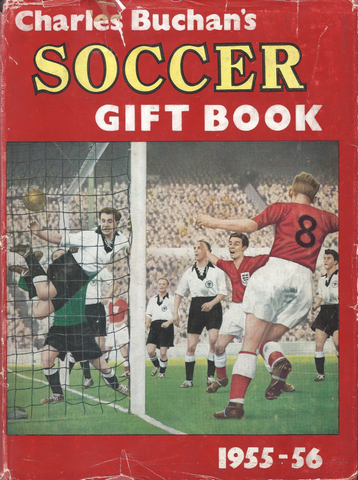
Holding Charles Buchan's Soccer Gift Book 1954-55 in your hands evokes a sense of magic amidst the era of instant replays and VAR controversies. This isn't just another football annual; it's a perfectly preserved slice of sporting history, when boots were leather, shorts were long, and the maximum wage for players was still £20 a week. The second edition in Buchan's celebrated series arrives in remarkably pristine condition. The red hardboard cover, untouched by the usual wear of time, stands proudly. Most striking is the original dust jacket, complete, unscuffed, and still bearing its original price of 10/6d. In today's collecting world, finding such an unblemished example is like discovering Stanley Matthews' boots in their original box. Leaf through its 160 pages, and you're transported to an era when football was shedding its working-class roots and becoming Britain's national obsession. The mix of colour and monochrome photographs captures a game in transition, with muddy pitches and packed terraces along with the first glimpses of modern tactical thinking and training methods. Buchan himself was no ordinary publisher. As a former First Division striker turned pioneering journalist, he brought an insider's eye to every page. His gift books weren't just annuals; they were masterclasses. Young fans would pore over detailed coaching tips while their fathers debated the tactical analyses that felt revolutionary for their time. The content presents a comprehensive overview of the biggest names in 1950s football. Action shots freeze-frame legends in their prime, while in-depth articles dissect the strategies that would shape the game for decades to come. The quizzes, fiendishly difficult by modern standards, remind us how deeply fans understood their sport in an age before Wikipedia.
What makes this edition particularly fascinating is its timing. Published just months after Hungary's magical Magyars had demolished England 6-3 at Wembley, these pages capture British football's first real reckoning with continental sophistication. You can almost feel the sport evolving beneath your fingertips.
But beyond its value as a collectible, this is a document of football's most pivotal decade. The 1950s saw television bring matches into living rooms, tactical revolutions sweep across Europe, and the first stirrings of the modern game emerge. This Gift Book captures that transformation in real-time, through the eyes of those who experienced it.
Every page offers fresh surprises. Here's Stanley Matthews explaining his dribbling technique; there's a tactical breakdown of the W-M formation. The advertisements alone are worth studying – boots for 19 shillings, leather footballs that needed lacing, and training equipment that looks positively mediaeval to modern eyes.
Buchan's genius was understanding that football isn't just about what happens on the pitch. His Gift Books created a complete world – part instruction manual, part yearbook, part time capsule. This 1954-55 edition might be his finest achievement, arriving when the sport stood on the brink of its modern era but hadn't yet lost its innocent charm.
For today's readers, whether collectors, historians, or simply lovers of the game, this volume offers something unique. It's not just a window into football's past – it's a reminder of how the sport felt when it was young, when every match was an event, and when a book like this could open up a whole new world of tactical understanding and sporting dreams.
This copy of The Charles Buchan’s Soccer Gift Book is in good condition. The binding is as tight and fresh as the day it left the printer. There are light signs of spotting (browning) on the publisher’s front and end papers, as well as the inside covers. The original dust jacket is fully intact, showing only the faintest trace of shelf wear, with three small chips (see photo). We’ve carefully cleaned away any surface marks using Absorene, leaving the covers looking as fresh as possible. The dust jacket has not been price clipped—still showing the original 10/6d, which is a nice detail—and is now safely protected in archival dust jacket sleeving.
 Archival System: More info Here